Microverse
Triton
Triton
Couldn't load pickup availability
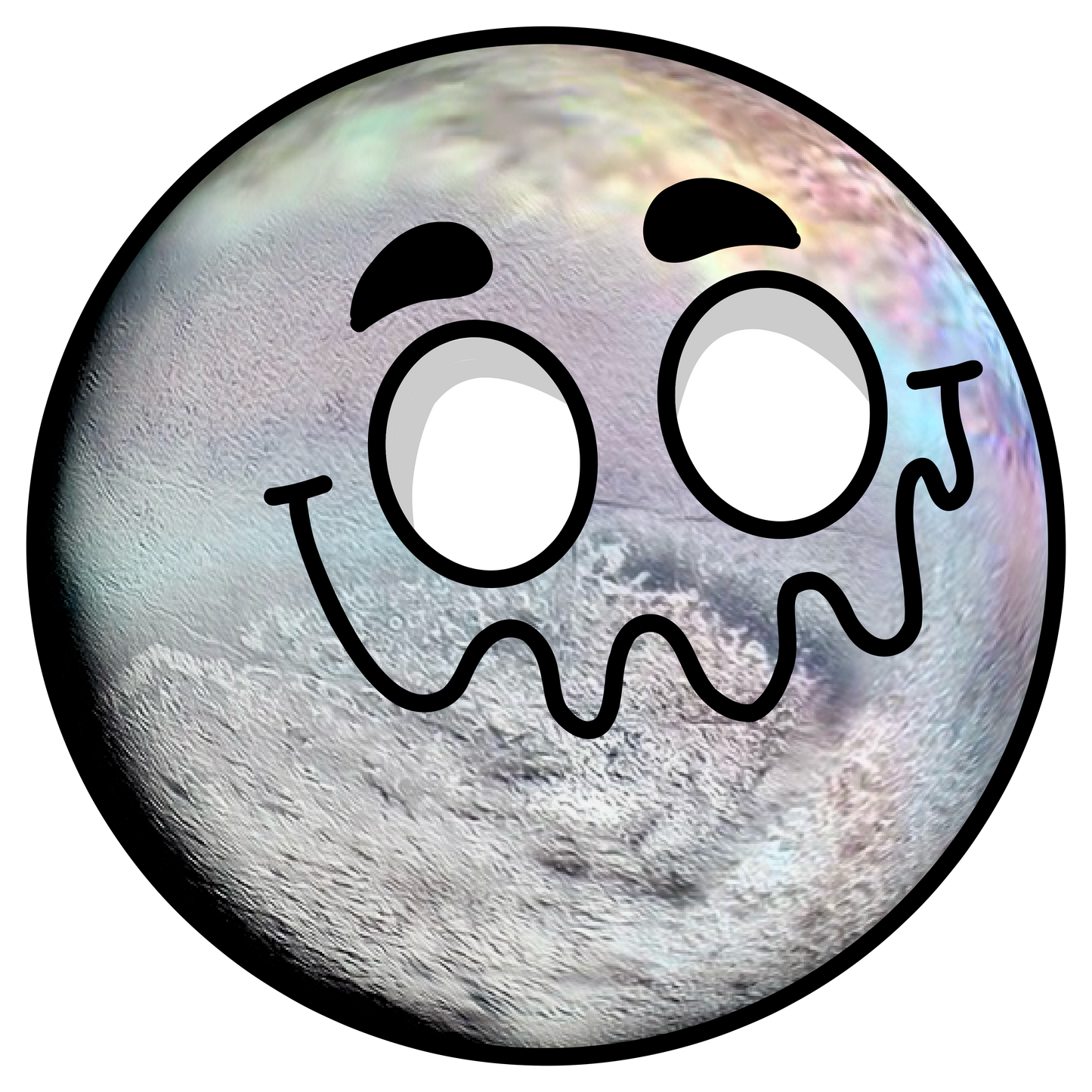
Discovered in 1846, Triton, Neptune's largest moon, is a world apart. At 2,700 km in diameter, it's almost as big as our Moon, but infinitely stranger. What makes Triton so unique? It orbits in reverse : in the opposite direction to Neptune's rotation, a sign that it was captured from another region of the Solar System, probably the Kuiper Belt.
Its surface is a landscape of ice and mystery. It features plains as smooth as glass, vast areas striated with faults, and enormous caps of frozen nitrogen extending near the south pole. Observations from the Voyager 2 probe revealed that Triton is not a frozen moon: active geysers were observed, spewing plumes of ice and gas more than 8 km high, a spectacular sign that something is still moving inside!
Beneath its icy crust, scientists believe a salty liquid ocean may exist, warmed by Triton's internal heat. Its surface, composed of nitrogen, methane, and frozen water, reflects nearly 80% of sunlight, giving it a pale, pinkish glow, an almost unreal, glacial beauty.
NEWS FLASH: In Greek mythology, Triton is the son of Poseidon (Neptune in Roman mythology), hence his association with the ice giant! Triton is the messenger of the god of the seas and is often associated with his conch shell. He uses this instrument to unleash storms or calm the waves. Besides his role as protector of the waves, Triton possesses powers of transformation and clairvoyance.
Triton is the perfect cosmic paradox : frozen on the surface, alive beneath. A rebellious, poetic moon, and perhaps even… a bearer of the ingredients of life. Triton can even be the guardian of the waters (of your bottles), in sticker form!
____________________________________________________________________________
PUN: Don't be frightened of Triton!
Partager